Glutinous rice flour, also known as shiratamako or mochiko, forms the soft, chewy texture beloved in Japanese sweets and many Asian snacks. This article highlights top American-market options, explains how to choose the right flour for mochi and other treats, and offers practical tips for using glutinous rice flour across recipes. Whether you’re making mochi skins, tangyuan, or chewy rice cakes, the right flour can dramatically improve texture and consistency.
Summary of Featured Products
| Product | Brand | Best Uses | Notes |
|---|---|---|---|
| Shiratamako Premium Glutinous Rice Flour | 玉三 | Mochi, Dango, Daifuku | Premium texture; imported from Japan |
| Soeos Glutinous Rice Flour 16 Oz | Soeos | Mochi, rice desserts, dumpling skins | Neutral flavor, versatile |
| Mochiko Sweet Rice Flour (Pack of 3) | Koda Farms | Mochi, sweet rice desserts | Multiple-pack convenience |
| Sweet Rice Flour (Glutinous Rice Flour, Mekoman) | mekoman | Mochi, tangyuan, dumplings | Gluten-free and versatile |
| 52USA Glutinous Rice Flour 32 Oz | 52USA | Breads, pastries, Asian desserts | Thai-gluten quality |
These selections cover traditional Japanese textures and broader Asian applications. When choosing, consider texture, flavor, and whether you prefer a traditional shiratamako style or a more neutral, all-purpose glutinous rice flour for experimentation.
Shiratamako Premium Glutinous Rice Flour

Shiratamako, or Shiratama ko, is a refined glutinous rice flour used to craft mochi, dango, and daifuku. This premium version aims to deliver a smoother, more elastic texture compared to other mochiko brands. It is imported from Japan, which may influence its flavor and the chewiness of finished treats. For mochi skins that need delicate chew and a glossy appearance, Shiratamako provides a traditional mouthfeel favored by many chefs and home bakers.
Soeos Glutinous Rice Flour 16 Ounce
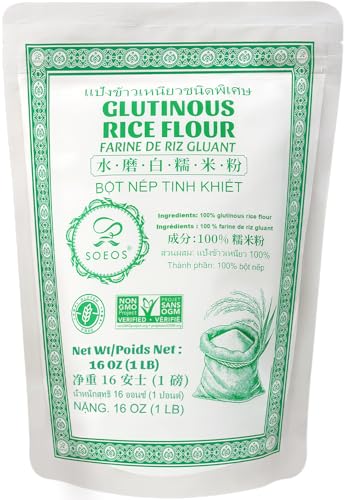
Soeos delivers a finely ground glutinous rice flour ideal for a range of Asian desserts and dishes. Its neutral flavor allows it to blend into both sweet and savory recipes without overpowering other ingredients. The flour’s elastic texture helps achieve mochi-like chew and makes it a strong base for dumpling skins or rice noodle bases. Its versatility also extends to puddings and baked goods that require a sticky yet cohesive structure.
Mochiko Sweet Rice Flour (Pack of 3)

Mochiko is a staple for classic mochi and many traditional Japanese desserts. The pack of 3 provides value for frequent makers. Made from short-grain sweet rice, Mochiko yields a characteristic glossy, soft, and chewy texture when steamed or steamed-and-dusted. This flour is often used in mochi fillings and as a key thickener in sweet sauces, giving a distinct mouthfeel that differentiates it from standard flours.
Sweet Rice Flour (Glutinous Rice Flour, Mekoman)

mekoman’s Sweet Rice Flour is designed for both traditional and modern recipes, offering a gluten-free option with sticky, chewy textures. It fits well in a spectrum of Asian desserts, dumpling wrappers, and snow skin mooncakes. The flour’s binding properties help retain moisture and give a resilient bite while remaining approachable for home bakers and beginners exploring glutinous rice flour.
Koda Flour Rice Sweet

From Koda Farms, this item reflects the traditional American market’s Mochigome style flour. While specific details are sparse in the listing, Koda Farms is widely recognized for dependable mochiko-style products used in mochi and rice-based confections. Expect a soft, cohesive dough that yields chewy rice desserts and coatings with a gentle sweetness.
52USA Glutinous Rice Flour 32 Oz

52USA offers a larger pack of glutinous rice flour with Thai origins. The flour is described as fine and white, designed to deliver smooth, chewy textures. It is suitable for a broad range of baking and cooking applications, including traditional desserts and snacks where a resilient, elastic bite is desirable. The Thai origin emphasizes a slightly different starch profile that can influence chewiness.
Thairaya Glutinous Rice Flour 16 Oz

Thairaya’s authentic Thai glutinous rice flour offers a direct import from Thailand, designed for traditional Asian cooking, mochi, tangyuan, and other desserts. Its fine, smooth powder supports even mixing and reliable results in both steaming and frying applications. The product emphasizes versatility for both desserts and savory dishes that require a sticky texture.
Buying Guide: Key Purchase Considerations
When selecting glutinous rice flour, consider texture, origin, and culinary goals. Shiratamako is traditional and delicate, ideal for mochi skins with a refined chew. Mochiko and mekoman varieties provide more neutral flavors suitable for a broader range of recipes, from desserts to savory coatings. For large-batch baking, value-packed multipacks may be cost-effective, while single-origin flours can yield more distinct textures and flavors. Gluten-free labeling is common, but verify facility practices if cross-contamination is a concern. Store in a cool, dry place and use within the recommended shelf life to maintain chewiness and elasticity.
Texture and chewing are influenced by the rice’s origin and processing. Japanese-style shiratamako tends to produce a softer, more delicate bite, while Thai and other Asian varieties may yield a firmer chew. For experimentation, blend flours or adjust ratios with small test batches to achieve the desired melt-in-the-mouth feel or structural integrity for fillings. If you are new to glutinous rice flour, start with a simple mochi recipe and adjust water content until you achieve the right stretch and gloss. Always measure by weight to improve consistency across batches.
In addition to recreational cooking, glutinous rice flour is used in gluten-free baking, thickening sauces, and certain fried coatings. Consider the end dish: a glossy mochi skin requires a delicate balance of moisture and starch, while dumpling wrappers may benefit from a slightly stronger elasticity. For regional recipes, select flours that align with traditional textures from Japan, Thailand, or other parts of Asia to respect authenticity while exploring new textures.