For professional kitchens that require fast, consistent dough shaping and pastry forming, a commercial pie press machine can streamline production. This article highlights five top options that balance durability, ease of use, and adjustable thickness to produce uniform crusts, pastries, and wrappers at scale. Each product comes from trusted brands and is designed for high-capacity environments, from bakeries to cafes and casual dining facilities.
| Product | Brand | Key Benefit |
|---|---|---|
| Wtecom Commercial Dumpling Making Machine | Wtecom | High-capacity dumpling/pastry wrapper production |
| VEVOR Electric Pizza Dough Press Machine (6 Inch) | VEVOR | Precise thickness control and easy handling |
| Newhai 8.6” Electric Pizza Dough Press | Newhai | Heavy-duty press with reliable performance |
| EliteEdge Manual Pizza Dough Press | EliteEdge | Manual control with durable cast iron build |
| VEVOR Manual Pizza Dough Press Machine (9.5 Inch) | VEVOR | Large-diameter pressing with smooth operation |
Wtecom Commercial Dumpling Making Machine
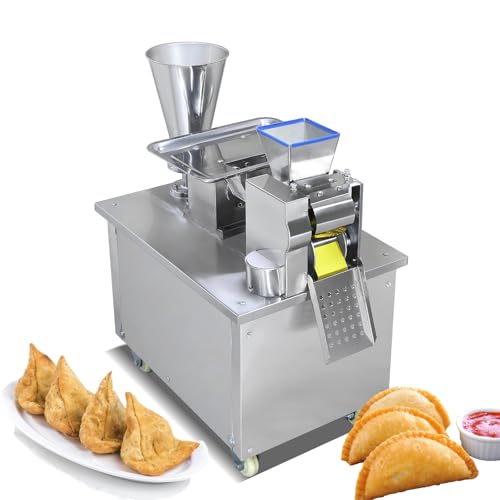
The Wtecom dumpling and pastry wrapper machine is built from food-grade stainless steel to withstand demanding, high-volume operations. It supports a wide range of shapes and fillings, including samosas, empanadas, gyoza, pierogi, ravioli, and more, with an impressive output of up to 5,000 pieces per hour. The machine features adjustable flour thickness and a double-spiral dough mixing system, enabling faster, more uniform dough prep. A standard SAMOSA mold is included, with 48 optional molds available for diverse shapes, making it suitable for varied product lines in commercial kitchens.
Key specifications include a 110V US plug, 220W motor, and overall dimensions of 660 x 435 x 770 mm (about 26″ x 17″ x 30″). Weighing roughly 242 lbs, it’s a sturdy choice for production lines. While it delivers robust capacity, users should plan for adequate space and a reliable power source. The machine’s automatic operation reduces manual labor but requires routine maintenance to maintain hygiene and performance. Its versatility makes it a strong contender for facilities producing multiple dumpling-and-pastry wrappers each day.
VEVOR Electric Pizza Dough Press Machine
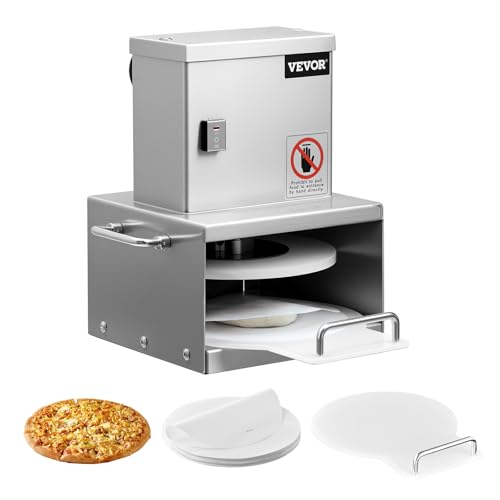
The VEVOR 6-inch electric pizza dough press is designed for consistent, professional results. Its stainless steel construction provides durability and a stable base for dependable pressing. The device includes an automatic rebound spring to produce uniform dough thickness, typically around 5 mm, making it suitable for tortillas, flatbreads, dumplings, and small bakery items. It arrives with 100 sheets of parchment paper to minimize sticking and simplify workflow in busy kitchens. This model is especially well-suited for cafes, bakeries, and fast-service venues seeking reliable, compact equipment with straightforward operation.
Users will appreciate the compact footprint while preserving capacity for steady output. The single-press design reduces fatigue for operators and speeds up batch processing. As with all high-output machines, routine cleaning and safeguarding electrical components are essential to maintain performance and food safety. This option is ideal when space is at a premium but consistent dough shaping remains a priority in production lines.
Newhai 8.6” Electric Pizza Dough Press

This Newhai model features an 8.6-inch pressing plate capable of flattening dough evenly for small pizzas, pies, flatbreads, and related baked goods. Its copper-core motor contributes to quiet operation and efficient heat dissipation, aiding long-term performance. The stainless steel body with smoothly finished edges improves handling safety. An ergonomic handle control lets operators dial in precise thickness, enabling consistent outputs across batches. The compact design makes it a practical fit for bakeries or restaurants looking to scale dough preparation without sacrificing countertop space.
With a focus on reliability and ease of use, the Newhai press supports repetitive, uniform pressing while keeping the process simple for staff. For facilities that produce small-to-mid sized pies or flatbreads, this model offers a balanced combination of accuracy, durability, and space efficiency. Regular maintenance and proper cleaning will help protect the smooth surface and extend the device’s lifespan in busy environments.
EliteEdge Manual Pizza Dough Press

The EliteEdge manual dough press is crafted from high-grade cast iron and food-safe 304 stainless steel, delivering robust durability for both home and commercial use. Its vertical pressing design ensures even dough distribution, and a widened base enhances stability during operation. After each press, a high-strength spring automatically rebounds, producing a consistent 5 mm dough thickness. The larger 9.5-inch press plate accommodates dough up to that size, making it versatile for hand pies, pastries, and similar items. This press emphasizes reliability and long-term performance in busy kitchens where manual control remains practical.
For facilities seeking to minimize power consumption while maximizing control, the EliteEdge model offers precise manual operation with solid construction. It’s suitable for bakeries, cafes, or catering operations that prioritize tactile control and predictable results. Cleaning and maintenance are straightforward, with attention to keeping the components dry and free from dough build-up to preserve smooth movement and longevity.
VEVOR Manual Pizza Dough Press Machine

The VEVOR manual press offers a 9.5-inch pressing diameter and a sturdy stainless steel frame with a handle-based operation for controlled dough shaping. The vertical pressing design ensures even thickness, and a spring rebound mechanism provides consistent outcomes after each press. The expanded base adds stability during use, reducing slip or wobble in fast-paced environments. This model is well-suited for pizzerias, small bakeries, and caterers that need reliable, hands-on dough shaping without electrical components.
With its emphasis on durability and ease of use, this press aligns with facilities that value hands-on control and rugged construction. The large plate size expands the range of dough products you can craft, including tortilla-like disks, flatbreads, and pastry rounds. Regular cleaning and routine checks on the spring and hinges are recommended to ensure continued precision and performance on long production runs.
Buying Guide: Key Purchase Considerations And Comparisons
When selecting a commercial pie press machine, consider these factors to match your operation with the right model:
- Output capacity: High-volume facilities benefit from machines with continuous feeding, stable motors, and robust frames. Assess hourly piece counts and how quickly you need to switch molds or shapes.
- Press plate size and thickness control: Larger plates enable bigger products; precise thickness settings ensure uniform crusts and fillings. Ensure the device accommodates your standard product sizes.
- Material and build quality: Food-grade stainless steel and durable cast iron components resist corrosion and wear. Look for smooth edges, BPA-free components, and easy-clean surfaces to maintain hygiene.
- Power and ergonomics: Electric presses save labor; manual presses rely on operator control. Consider quiet operation, ergonomic handles, and ease of cleaning to fit your staff’s workflow.
- Maintenance and mold options: A wide mold library or easy mold swaps expand product versatility. Check availability of replacement parts and compatible accessory molds for future expansion.
- Safety features: Guarding, stable bases, and safe electrical design reduce risk in busy environments. Ensure compliance with local safety regulations and food-safety standards.
- Footprint and placement: Space constraints determine whether a compact 6-inch model or a larger 9.5-inch machine is appropriate. Plan for a clean, dry area near your dough-prep station.
- Cost of ownership: Initial purchase price, mold availability, and potential maintenance fees affect total cost of ownership. Balance upfront costs with the expected lifespan and productivity gains.
In sum, a commercial pie press machine should balance throughput, product consistency, and operator comfort. For operations that require a mix of wrapper doughs and pastries, a versatile, durable model with a broad mold selection provides the most value. Manual presses excel where electrical simplicity and tactile control are preferred, while electric models shine in high-volume environments where automation reduces labor and speeds up throughput.