Electric coffee percolators rely on sturdy, well-made filters to deliver a clean cup with balanced flavor. The right percolator filters keep grounds from slipping into your brew while maximizing aroma and filtration. Below are five top choices that fit most standard electric percolators, along with practical buying tips to help you pick the best option for your routine and family size.
Summary of chosen products (at a glance):
| Product | Brand | Key Size | Approx. Count | Notes |
|---|---|---|---|---|
| 300 Count Percolator Coffee Filters | Prudiut | 3.75 inches diameter | 300 | Unbleached, wooden pulp, center hole 0.39″ |
| Coffee Filters Compatible With Farberware Percolator | brikinte | 4-cup to 6-cup sizes listed | 150 | Unbleached, compatible with multiple Farberware and similar models |
| Melitta White Wrap Around Filters For Percolator | Melitta | Fits standard percolator baskets | 80 | Wrap-around design for easy cleanup |
| 200 Count Percolator Coffee Filters | Prudiut | 3.75 inches diameter | 200 | Unbleached, BPA-free, embossed edges |
| Percolator Coffee Filters Compatible With Presto | brikinte | Perforated, wavy design | 200 | Biodegradable, compostable natural pulp |
Prudiut 300 Count Percolator Filters

The Prudiut 300-count set provides a standard 3.75-inch diameter filter with a 0.39-inch center hole, designed for most percolators up to 3.75 inches. Made from wood pulp, these filters are unbleached and aim to minimize odor and flavor loss during brewing. They’re a practical choice for households that brew daily or host weekend gatherings. The disposable design reduces cleanup time and helps maintain consistent filtration across multiple pots of coffee.
brikinte Farberware Compatible Percolator Filters
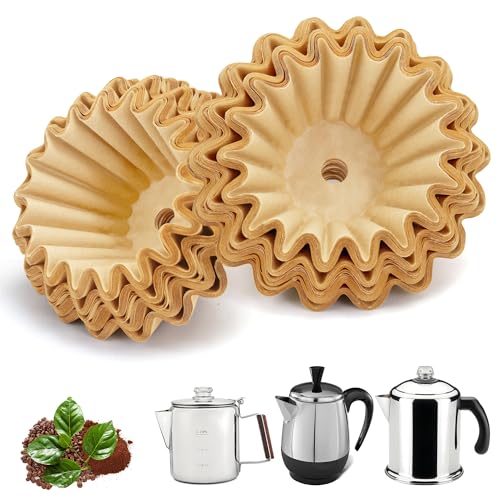
These filters are designed for Farberware percolators and other compatible models like Coletti Bozeman 6-Cup and Elite Gourmet EC140. They use food-grade paper to provide reliable filtration while being disposable for simple cleanup. The packaging emphasizes broad compatibility, which makes them a versatile option for households with multiple percolator brands. The unbleached, high-quality paper helps avoid adding off-flavors while maintaining the coffee’s natural aroma and body.
Melitta White Wrap Around Filters For Percolator

This Melitta option includes wrap-around filters designed to encase the coffee grounds, minimizing oils and sediment in the final cup. With a total of 80 filters (in two packages of 40), the product is well-suited for regular home use. The wrap-around form helps keep grounds contained during the brewing cycle and simplifies cleanup, offering a smoother, cleaner cup with less oily residue.
Prudiut 200 Count Percolator Filters

The 200-count pack by Prudiut mirrors the standard 3.75-inch diameter and 0.39-inch center hole, ensuring compatibility with most percolators of that size. The filters are unbleached and crafted from wood pulp, offering a clean filtration path and reducing potential off-flavors. A practical option for families or small offices that brew several pots weekly, these filters balance cost with reliable performance and easy disposal.
presto-Compatible Percolator Filters

These Percolator filters are specifically marketed as compatible with Presto electric percolators, featuring a perforated, wavy design that matches the inner basket shape. The filters are made from natural pulp paper, emphasizing biodegradability and compostability. The perforated center helps to ensure even water flow and consistent extraction across the grounds, reducing the chance of channeling and uneven brew. They suit households using Presto-branded units or similar 12-cup to 10-cup models.
Each product offers different balance points between price, size, and filtration style. When choosing filters, consider the percolator cup size, basket design, and preference for either wrap-around or disc-style filters. Bleached vs. unbleached options can affect taste, while pre-punched holes and embossing contribute to durability and flavor clarity.
Buying Guide: Key Purchase Considerations For Percolator Filters
- Size and compatibility: Confirm the filter diameter and center hole size match your percolator’s basket. Most standard percolators use a 3.75-inch diameter with a small central hole, but some models vary. If you own multiple percolator brands, look for filters marketed as compatible with several brands.
- Filter material: Unbleached wood pulp is common and tends to have less odor than bleached options. Unbleached filters may better preserve natural coffee flavors, while bleached filters can be softer or have a slightly different taste profile.
- Perforation design: Perforated (pre-punched) holes enable even water flow and faster blooming of coffee grounds. Disc-style filters often provide easier cleanup, while wrap-around variants minimize grounds seepage during brewing.
- Count and cost per use: Higher-count packs reduce replacement frequency and are cost-efficient for homes that brew daily or in larger gatherings. Consider your weekly usage to estimate total savings.
- Environmental impact: Biodegradable and compostable options are available in some lines. If sustainability matters, check for natural pulp and any certification claims on the packaging.
- Flavor impact: Filters influence sediment and oil transfer. If you prefer a cleaner cup with less sediment, choose finer filtration and wrap-around designs. For richer mouthfeel, bulkier or perforated discs may suffice while still filtering grounds effectively.
- Ease of use and cleanup: Wrap-around and cone-style filters can simplify cleanup by enclosing grounds. Disposable discs reduce after-brew mess but may require more careful basket fitting to prevent shifting during brewing.