Choosing a wooden chopping board with a lip helps keep juices contained, prevents slips, and adds a touch of natural elegance to any kitchen. This guide highlights five top options that balance durability, knife-friendliness, and practical lip designs. Each product supports confident slicing, dicing, and serving, while helping reduce countertop mess.
| Product | Brand | Size (approx.) | Key Benefit |
|---|---|---|---|
| Farberware Nonslip Bamboo Cutting Board with Juice Groove | Farberware | 11×14 in | Non-slip trim and juice groove |
| TIDITA Teak Wood Cutting Board with Lip | Tidita | 16×12 in | Counter lip for stability |
| TIDITA Acacia Wood Cutting Board with Handle | Tidita | 24×18 in | Large surface with secure lip |
| TIDITA 16” Acacia Wood Cutting Board with Handles | Tidita | 16×12 in | Counter lip and easy handling |
| YYRZZ Bamboo Cutting Board with Lip | YYRZZ | 17.3×13.4 in | Built-in juice groove |
The following sections detail each product, focusing on design, materials, and practical considerations to help you pick a board that fits your kitchen workflow and storage needs.
Farberware Nonslip Bamboo Cutting Board With Lip

Material and construction: This board uses bamboo, a durable, renewable material gentle on knives. The board includes a juice groove to trap liquids, helping to keep countertops clean during prep. A non-slip trim and a hand hole aid stability and control during use.
Practical use: Ideal for cutting, slicing, and chopping a variety of foods. It doubles as a serving platter for small cheeses, olives, breads, or appetizers, making it versatile for both prep and presentation.
TIDITA Teak Wood Cutting Board With Lip

Material and design: Crafted from premium teak wood, this cutting board emphasizes moisture resistance and natural elegance. It features a 1” counter lip that helps grip the countertop, preventing sliding during slicing and kneading.
Practical use: The 16”x12” size provides ample prep space while remaining manageable for smaller kitchens or apartments. It’s suitable for daily chopping, dough work, and as a serving board for cheese and charcuterie, with a focus on stability during use.
TIDITA Acacia Wood Cutting Board With Handle (24″ x 18″)

Material and design: Made from premium acacia wood with natural variation that adds character to each piece. This board functions as a dual-purpose cutting and kneading surface with a secure 1-inch lip to hold it in place on the counter.
Practical use: The large 24”x18” surface is ideal for big meals, rolling dough, or slicing multiple ingredients at once. It also doubles as a stylish serving board for bread, meat, or cheese during gatherings.
TIDITA 16” Acacia Wood Cutting Board With Handles
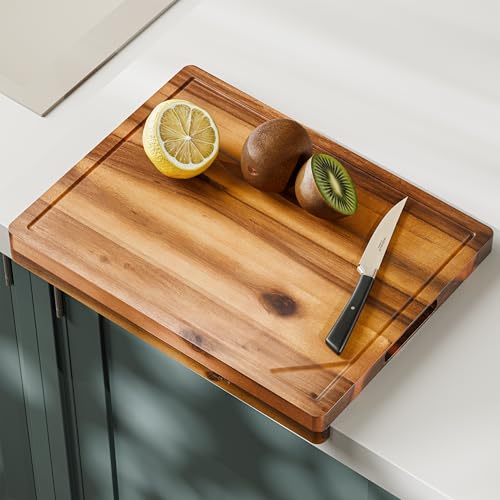
Material and design: This board uses durable acacia wood with a pronounced wood grain for natural appeal. It includes a built-in counter lip to reduce movement and a convenient handle design for easy transport.
Practical use: The 16×12 inch footprint offers a balanced prep area for everyday cooking, making it suitable for compact kitchens, RVs, or countertops with limited space. It is simple to clean and store when not in use.
YYRZZ Bamboo Cutting Board With Lip

Material and design: Built from bamboo with a built-in juice groove and a lip to stabilize the board on the counter. The bamboo surface is noted for durability and knife-friendliness, while the lip helps prevent spills.
Practical use: Designed for cutting vegetables, fruits, meats, and cheeses. The lip helps catch liquids, and the board’s large size makes it suitable for shared prep tasks or entertaining prep stations.
Buying Guide: Key Purchase Considerations
- Material and knife-friendliness: Bamboo, acacia, and teak woods are common, each with different hardness and maintenance needs. Softer woods can be gentler on blades, while hardwoods resist deep knife marks.
- Lip design and juice management: A deep juice groove or a lip helps contain liquids, reducing countertop mess. A stable lip or counter edge minimizes sliding during use.
- Size and storage: Consider your counter space and storage options. Large boards are great for family meals or dough work, but smaller boards fit compact kitchens or RVs.
- Maintenance and cleaning: Some woods require oiling to prevent drying or cracking. Bamboo boards are low-maintenance but should be dried promptly to prevent warping.
- Dual function: Many boards double as serving platters. If you entertain often, a large board that can act as both prep space and display piece adds value.
- Cleaning and sanitation: Non-porous surfaces like certain steel or sealed boards are easier to sanitize, but many wooden boards rely on proper drying and occasional oiling to maintain performance.
Selecting a wooden chopping board with a lip involves balancing size, stability, and maintenance. The options highlighted here provide a mix of bamboo, teak, and acacia woods, each designed to minimize mess and maximize prep efficiency while preserving knife edges.