Clean, great‑tasting water starts with a reliable filtration system. This article highlights five top countertop and under‑sink filters designed to reduce chlorine, heavy metals, and common contaminants while preserving essential minerals. Each option targets standard faucets, with easy installation and recognizable certifications. The table below provides a quick snapshot of the selected products and their key traits to help you compare at a glance.
| Product | Gallon Capacity | Certifications | Notes |
|---|---|---|---|
| Waterdrop WD-CTF-01 | 8000 gallons | NSF/ANSI 42 | Stainless steel, compact countertop system |
| OEMIRY OM-CF01 | 8000 gallons | NSF/ANSI 42 & 372 (implied) | Multistage filtration, no electricity |
| Waterdrop WD-CTF-05 | 4000 gallons | NSF/ANSI 372 (lead) | Dedicated faucet design option |
| iSpring CKC1C | Not specified here | NSF/ANSI standards | Clear housing for easy filter checks |
| Purewell PW-OB | 2.25 gallons | NSF/ANSI 42 & 372 | 3‑stage ultrafiltration gravity system |
Waterdrop WD-CTF-01: Stainless Steel Countertop Filter

This Waterdrop countertop system uses a 5‑stage approach designed to reduce heavy metals and 99% of chlorine while preserving beneficial minerals. The unit is built from 304 food‑grade stainless steel and has a brushed, fingerprint‑resistant finish. It is designed for standard faucets and includes hardware for quick installation. Important compatibility details specify that the device does not reduce total dissolved solids (TDS) and is not compatible with pull‑out, handheld, spray, or sensor faucets. The system comes with a filter and a simple switch to alternate between tap water and filtered water.
Performance notes emphasize safety and mineral retention, aiming to deliver clean, healthy water with a robust stainless steel build. As with most countertop filters, users should confirm faucet compatibility before purchase. The product is easy to install, requiring only standard faucet connections and a wrench for securing fittings. Its compact footprint makes it suitable for smaller kitchens or apartments where under‑sink filtration is not ideal.
Designed usage focuses on home drinking water, cooking, and making beverages. The kit includes the essential components to connect to most standard kitchen taps, with clear indications about operating temperature and pressure ranges. While it is a strong option for non‑electric, on‑demand filtration, consumers who want TDS reduction or compatibility with non‑standard faucets may wish to review alternatives or additional adapters.
OEMIRY Countertop Water Filter OM-CF01

The OEMIRY countertop system employs a multi‑stage filtration design that targets chlorine, heavy metals, fluoride, and odors. It promises safe, mineral‑rich water without reducing TDS. The unit supports standard faucet connections and includes a straightforward assembly with all necessary hardware. A dedicated on/off switch allows quick toggling between filtered and unfiltered water. It also notes that certain faucet types (pull‑out, spray, or sensor) are not compatible, so faucet verification is advised prior to purchase. The setup is compact and suited for homes, offices, or small apartments.
Key strengths include effective taste improvement and a compact footprint, making it a convenient option for daily drinking water, cooking, and even skincare routines that use filtered water. The filtration system is designed to be maintenance‑friendly, with clear guidance on replacement cycles and a simple filter change procedure. Potential buyers should confirm faucet compatibility and be aware that TDS is not reduced by this system, which can be a plus when mineral balance is desired.
With zero electricity needs and no wastewater generation, this filter presents an economical, low‑burden way to improve water quality without complex plumbing. It suits households seeking reliable filtration without professional installation or ongoing energy costs while maintaining essential minerals in the water supply.
Waterdrop WD-CTF-05: 4000‑Gallons Countertop Filter

This Waterdrop model emphasizes a smaller capacity with a built‑in reminder for filter life. It reduces heavy metals and 99% of chlorine while avoiding TDS reduction, suitable for standard kitchen taps. A dedicated faucet design helps separate filtered water for drinking and cooking from tap water for other uses. Certification alignment includes NSF/ANSI 372 for low lead content. The system is positioned as a practical, space‑saving countertop option that can be installed without major renovations.
Installation considerations focus on compatibility and user experience—the filter is designed for standard faucets, with a straightforward switch to access filtered water. There is a reminder mechanism to help users replace filters on schedule, ensuring continued performance. Prospective buyers should verify their faucet type and assess whether the dedicated faucet approach aligns with their kitchen layout and aesthetic preferences. The compact design makes it ideal for renters or small kitchens seeking dependable water filtration.
As with other Waterdrop models, performance hinges on routine maintenance and filter replacement. The 4000‑gallon life expectancy provides a clear maintenance horizon for planning purchases and replacements in households that rely heavily on filtered drinking water.
iSpring CKC1C Countertop Filtration System
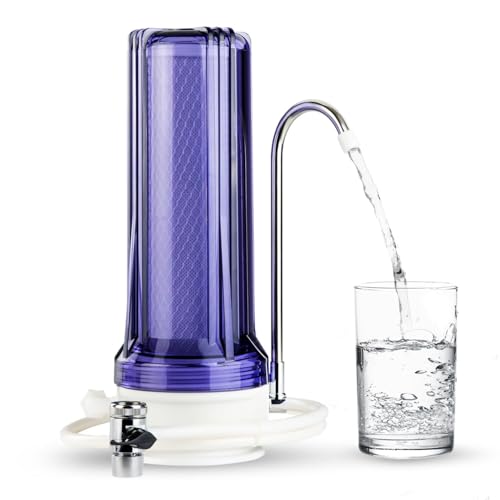
The iSpring CKC1C offers a clear housing so users can see When to replace the cartridge. It uses a carbon block cartridge to remove up to 95% of chlorine and odors, while also addressing sand, silt, sediment, and rust. The system is compatible with most standard kitchen taps and includes hardware for simple installation, with a switch to move between unfiltered and filtered water. It emphasizes third‑party testing to NSF/ANSI standards, underscoring its commitment to performance and safety.
From a consumer perspective, the CKC1C provides a balance between visibility, ease of use, and effective filtration. The clear housing helps with maintenance planning, while the carbon block cartridge targets common taste and odor concerns. Potential buyers should review their faucet type to ensure compatibility, and consider whether they prefer a compact design or a model with an integrated indicator for filter life. The CKC1C is well suited for households seeking straightforward, reliable filtration without complex installation.
Purewell PW-OB 3‑Stage Ultrafilter Gravity System

The Purewell gravity filtration system uses a 3‑stage process with a 0.01 μm hollow fiber UF membrane and activated carbon. This combination targets chlorine, rust, sediment, organics, and heavy metals while maintaining minerals. Certification includes NSF/ANSI 42 and 372, providing independent assurance of contaminant removal and lead limits. The unit includes a 304 stainless steel housing and a stainless steel spigot, with a standalone stand for stability. Its gravity design means no electricity is required and it can operate with a simple fill and filter cycle.
Purewell emphasizes high filtration accuracy through a smaller pore size, claimed to remove 99.99% of tiny materials. The system is suited for households prioritizing advanced filtration without connection to an under‑sink faucet. The included accessories and sturdy build support durability and ease of use. Potential buyers should weigh the gravity filtration advantages against the slower flow rate and the need to fill the system before drinking. The product is a practical option for those seeking higher filtration efficacy and a stylish stainless steel aesthetic.
Buying Guide: Key Purchase Considerations
- Filtration goals: Choose a system that targets the contaminants you worry about most (chlorine, lead, heavy metals, odors, tastes). Some models emphasize mineral retention, while others focus on aggressive impurity removal.
- Certification: NSF/ANSI 42 validates taste and odor improvements; 372 addresses lead content; 53/58 covers other contaminants in certain filters. Look for third‑party testing to confirm performance claims.
- Faucet compatibility: Many countertop or under‑sink filters require standard faucet connections. Check for compatibility with pull‑out, spray, or sensor faucets to avoid arming a filter that won’t fit.
- Cleaning and maintenance: Examine filter life, replacement costs, and whether the system uses a dedicated faucet, a single cartridge, or multiple stages. Gravity systems may require more routine refills but typically have low operating costs.
- Flow rate and capacity: Consider daily water usage. Higher gallon capacities reduce replacement frequency but may require more space. Countertop models often balance compactness with reasonable flow.
- Installation and footprint: Under‑sink setups save counter space but may require professional help. Countertop models are usually easier to install but occupy bench space.
- Waste water and energy: Gravity systems consume no electricity and produce no wastewater, while some cartridge systems may generate waste water or require power in certain configurations.
- Mineral content and TDS: Some filters do not reduce total dissolved solids to preserve minerals; others intentionally reduce TDS. Decide whether you prefer mineral retention or lower mineral levels.
- Aesthetics and materials: Stainless steel housings offer durability and a premium look but may be heavier. Consider finish, corrosion resistance, and ease of cleaning.
- Budget and replacement cadence: Initial cost plus filter replacement costs over time influence total ownership. Compare long‑term cost of ownership rather than upfront price alone.
These considerations help align a chosen filter with household needs, kitchen layout, and water quality goals. Prospective buyers should assess faucet compatibility, desired filtration level, and maintenance effort to select the most suitable system. The five options above span countertop and gravity designs, offering diverse approaches to achieving pure, clean drinking water.