Pellet grill pid controller upgrades are the key to achieving consistent cooks, better smoke control, and easier backyard grilling. This guide highlights reliable universal and replacement PID controllers designed for Traeger, Pit Boss, Z Grills, and Asmoke models. Read on to compare compatibility, features, and smart options that help you lock in temperature, minimize waste, and troubleshoot common issues—all from your phone or a digital display.
The table below summarizes five top-rated PID controllers for pellet grills, highlighting compatibility, control features, and notable capabilities to help you quickly identify options that fit your setup.
| Product | Brand | Compatibility Highlights | Key Features |
|---|---|---|---|
| Replacement of The Universal PID-Enhanced Grill Temperature Control Panel | Rrzrxbv | Traeger BAC236/365/288, Pit Boss, Z Grills, Asmoke | 3 PID programs, real-time circuit monitoring, silicone gasket |
| Replacement Digital Controller Board for Pit Boss/Traeger/Zgrill | FCCUM | Traeger, Pit Boss, Z Grills, Asmoke | 3 versions (300/450/700), Cool Down, Smoke Modes |
| Meatender WiFi PID Grill Controller (App-Enabled) | Meatender | Traeger Pro 22/34, Pit Boss 700/820, Z Grills 700/1000, Asmoke | Smart app control, multiple compatibility, 1°F steps |
| Universal WiFi PID Digital Thermostat for Traeger/Pit Boss | Unidanho | Traeger BAC236/365/288; Pit Boss 440/700/820/850/1000; Asmoke, Z Grills | Smart WiFi app control, precise PID control |
| PID Rectangular Digital Control Board (Non-WiFi) for Pit Boss | Meatender | Pit Boss 440-1150 series, Navigator, Mahogany, Pro Series | 3 PID programs, 9 cooking temps, P Smoke mode |
Replacement Universal PID-Enhanced Grill Temperature Control Panel
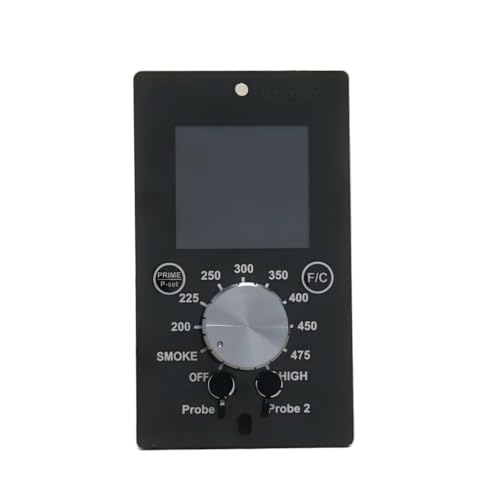
The control panel is designed to fit a wide range of pellet grills, including Traeger BAC236, BAC365, and BAC288 models, as well as Pit Boss, Z Grills, and Asmoke. It includes a silicone gasket to bridge mounting gaps with older models, plus a three-program PID system tailored to different cooking surface areas—from compact tables to grills around 1000 square inches. Real-time circuit monitoring helps alert users to poor contact, shorts, or overloads, supporting safer, more reliable operation.
Replacement Digital Controller Board for Pit Boss/Traeger/Zgrill

This universal control board is compatible with Traeger, Pit Boss, Z Grills, and Asmoke pellet grills. It offers three PID variants (300, 450, 700) designed for different cooking areas to maintain your setpoint. A Cool Down feature helps reduce the risk of fuel pipe scorching, ash buildup in the burn pot, and hopper backfires, while a dedicated Smoke Mode provides varied smoke levels to enhance flavor without sacrificing temperature stability.
Meatender WiFi PID Grill Controller (App-Enabled)

Meatender’s WiFi-enabled PID controller supports Traeger Pro 22/34, Pit Boss 700/820, Z Grills 700/1000, and Asmoke units. It requires verification of mounting hole depth and may necessitate minor modifications on smaller or older grills. It communicates via app for real-time temperature monitoring, remote control, and dual meat probe tracking, making it a suitable upgrade for busy cooks seeking convenience alongside precise temperature control.
Universal WiFi PID Digital Thermostat for Traeger And Pit Boss

Unidanho’s WiFi PID controller supports Traeger BAC236/365/288 and Pit Boss models across a broad lineup, plus Asmoke and Z Grills. It emphasizes app-based control and real-time monitoring to minimize temperature swings and pellet waste. The setup enables remote adjustments, smoke level variation, and precise setpoint adherence, ideal for cooks who want flexibility without manually babysitting the grill.
PID Rectangular Digital Control Board (Non-WiFi) for Pit Boss

This non-WiFi controller is a direct fit for Pit Boss models in the 440-1150 range, Navigator, Mahogany, Pro Series, and related units. It provides three PID programs to maintain consistent temperatures across different grill sizes, with a 9-temperature range for Cook and Smoke modes, including a P smoke option to extend flavor while preserving heat stability. It’s a solid upgrade for traditional setups seeking reliable digital control without wireless features.
Buying Guide: Key Considerations For Choosing A Pellet Grill PID Controller
- Compatibility: Verify model numbers and mounting dimensions before purchasing. Some boards are designed for Traeger BAC236/365/288, Pit Boss 440-1150, or Z Grills, and may require physical adjustments to fit older frames.
- PID Structure: Look for controllers offering multiple PID programs that match grill size and cooking surface area. More options help maintain precise temperatures across various meat loads and ambient conditions.
- Smart Features: WiFi or app-enabled models allow remote monitoring, temperature control, and dual-probe tracking, which can reduce monitoring time and improve consistency on busy days.
- Diagnostics: Real-time fault detection for igniters, augers, and fans helps identify issues early, reducing the risk of uneven cooking or equipment damage.
- Ease of Installation: Some boards include additional gaskets, mounting brackets, or complete kits with probes and wiring. Consider whether professional installation is preferred or necessary for your grill.
- Odor and Smoke Options: Versions offering enhanced smoke modes can improve flavor without sacrificing temperature control. Balance this with the need for precise setpoint maintenance.
- Reliability and Support: Choose brands with positive reviews and clear return policies. Replacement parts and technical support should be accessible if you encounter compatibility challenges.
- Power and Safety: Ensure the controller operates within your grill’s electrical and safety specifications, and verify that the unit includes appropriate overheat and short-circuit protections.
Installing a pellet grill PID controller can extend the life of older grills, improve cooking consistency, and enable convenient remote operation. When evaluating options, prioritize compatibility with your specific model, the granularity of temperature control, and the availability of diagnostic features. For hands-off cooks, app-enabled solutions provide the most value, while traditional non-WiFi controllers still offer dependable, precise heat management.