Discover top hybrid chef-cleaver knives designed to tackle meat, poultry, and vegetables with precision. This guide highlights five premium blends that fuse blade versatility with robust construction, offering sharp performance, ergonomic handling, and durable materials. Each pick combines chef knife finesse with cleaver heft to smooth daily kitchen tasks—from mincing herbs to portioning large cuts.
| Product | Brand | Key Benefit |
|---|---|---|
| Cutluxe Cleaver Chef Knife – 8″ | Cutluxe | German steel, full tang, grooves for easy chopping |
| DALSTRONG Hybrid Cleaver & 8″ Chef Knife – The Crixus | Dalstrong | AUS-10V core, 66 Damascus layers, razor edge |
| Dalstrong The Crixus Gladiator Series Elite – 8″ | Dalstrong | German HC steel, full tang, hybrid design |
| Babish High-Carbon 1.4116 German Steel Cutlery – 7.5″ | Babish | Single-piece high-carbon steel, standout performance |
| SYOKAMI Butcher Knife – 10″ | SYOKAMI | 2-in-1 blade design, full tang, ergonomic grip |
Each option aims to balance weight, edge retention, and comfort, helping cooks switch between chopping, slicing, and portioning with minimal effort. The selections below provide varied steel types, handle styles, and blade geometries to suit different kitchen setups and user preferences.
Cutluxe Cleaver Chef Knife – 8″
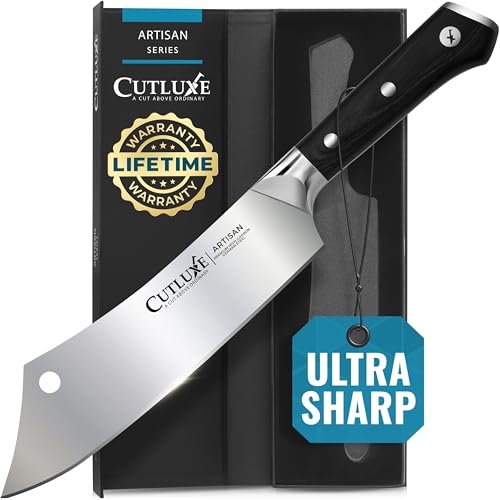
Cutluxe’s 8″ Cleaver Chef Knife is designed for multipurpose use in a single, versatile tool. The blade features grooves along the sides to reduce sticking and facilitate smooth chopping, slicing, dicing, and mincing of meat, poultry, and vegetables. Hand-sharpened to a 14-16 degree edge per side, its German high-carbon stainless steel promises sharpness and edge retention. A 56+ Rockwell hardness rating contributes to rust and stain resistance, while a full tang and ergonomic handle deliver stability during heavy tasks.
DALSTRONG Hybrid Cleaver & 8″ Chef Knife – The Crixus

The Dalstrong Shogun Series ELITE “Crixus” blends a genuine AUS-10V Japanese super steel core with 66 layers of Damascus-clad stainless steel for extraordinary durability and a visually striking pattern. The blade is honbazuke sharpened to a razor edge at 8-12 degrees per side, with nitrogen cooling for hardness and resilience. Its full tang and triple riveted handle provide superb balance and control, making it suitable for meat prep, slicing, and portioning as a hybrid chef-cleaver.
Dalstrong Gladiator Crixus – 8″ Chef Knife

Dalstrong’s Gladiator Series The Crixus offers a hybrid blade that combines chef knife precision with cleaver-like heft. It features an imported high-carbon German steel blade with a hand-polished edge in the 16-18 degree range per side, providing clean, decisive cuts through meat and bone. The G10 Garolite handle is triple-riveted for secure handling and comfort during long prep sessions. This knife is designed to deliver reliable performance in busy kitchens and BBQ setups.
Babish High-Carbon 1.4116 German Steel Clef

Babish’s 7.5″ clef knife blends high-carbon 1.4116 German steel with single-piece forging to deliver a robust blade with excellent edge retention. While marketed as a cleaver-knife hybrid, its construction and edge geometry enable precise slicing through meat and larger prep tasks. The knife is tempered and ground for sharpness, with a design that emphasizes balance and ease of use for both home cooks and enthusiasts.
SYOKAMI Butcher Knife – 10″

SYOKAMI’s 10″ butcher knife features a 2-in-1 blade design, combining the edge geometry of a chef knife with the heft of a cleaver. The blade uses high-carbon steel with a precise hand-polished edge at 15 degrees per side for sharp performance. The full tang construction, reinforced rivets, and a hygroscopic wenge wood handle provide secure balance and comfortable handling. The knife is designed to manage chopping and slicing tasks efficiently, reducing fatigue during extended prep sessions.
Buying Guide
Key purchase considerations for hybrid chef-cleaver knives include blade material, edge geometry, and balance. High-carbon stainless steels offer strong edge retention and corrosion resistance, but users should be mindful of maintenance to prevent staining. The edge angles vary from roughly 8-12 degrees per side on ultra-sharp chef-oriented blades to 14-16 degrees on some multipurpose edges; the right choice depends on cutting style and cuisine focus.
Handle design and tang construction influence comfort and control. Full tang blades with triple-riveted handles generally provide the most stable feel during heavy chopping. Weight distribution matters for fatigue reduction; a blade with balanced heft near the middle offers smoother precision when transitioning from mincing herbs to portioning meat.
Blade geometry is another factor: hybrid blades often feature a curved profile for clean slices and a straighter edge for chopping through tougher materials. Damascus-clad or layered blades can offer durability and a distinct aesthetic, but maintenance and sharpening considerations should be considered. If you frequently prep large cuts or require versatility in a compact tool, a well-balanced hybrid may suit your kitchen workflow best.
Care and maintenance: wash by hand to preserve edge integrity and prevent corrosion. Regular honing helps maintain a sharp edge between sharpens, and occasional professional sharpening can extend blade life. A dedicated knife storage solution protects the edge and ensures longevity.